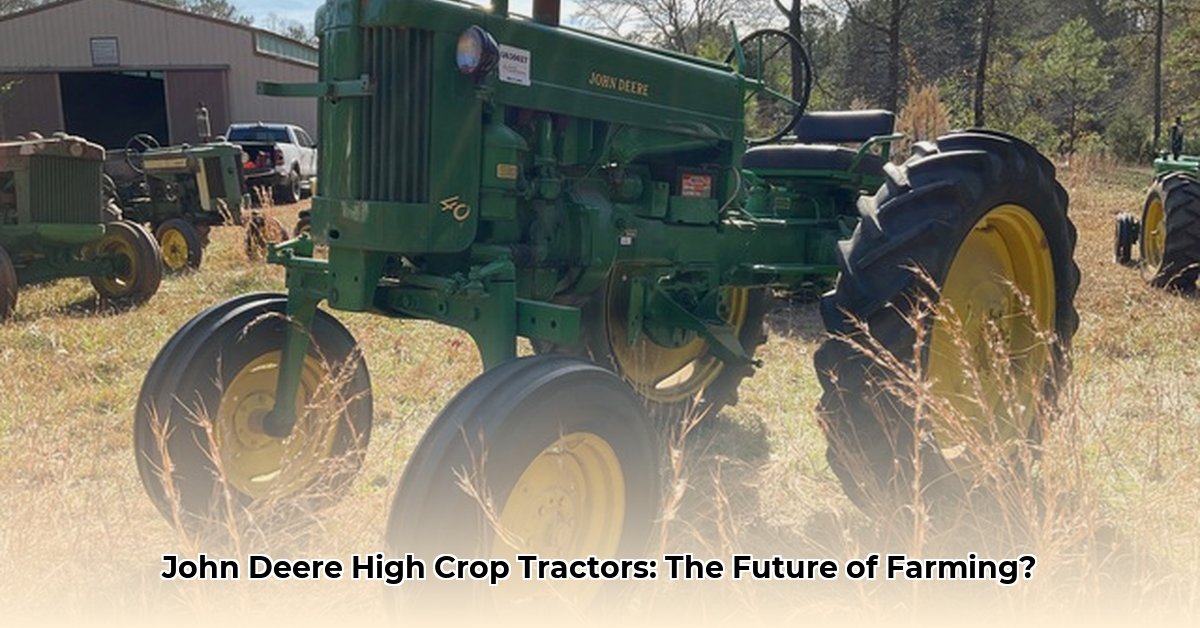
Finding the right tractor is a significant investment, impacting both your farm's profitability and its environmental footprint. John Deere's high-crop tractors represent a compelling option for farmers seeking a powerful yet sustainable solution. This article explores the key features, benefits, and comparisons to help you make an informed decision. For more information on John Deere tractors, check out this helpful resource.
Power and Precision: Unpacking the Specifications
John Deere's high-crop tractors are engineered for maximum efficiency and minimal environmental impact. While specific models and features vary, you can generally expect impressive horsepower (both engine and PTO), advanced transmission systems, and robust hydraulic capabilities. These tractors often incorporate cutting-edge technology, significantly impacting sustainability.
- Engine Horsepower: This determines the tractor's pulling power and overall capabilities. Higher horsepower allows for handling more demanding tasks and larger implements. (The raw power of the engine.)
- PTO Horsepower: This specifies the power available to operate implements like planters, mowers, and balers. Sufficient PTO horsepower ensures smooth, efficient operation of attached equipment. (Power delivered to implements.)
- Transmission Type: Advanced transmissions, such as the eIVT (infinitely variable transmission), offer seamless shifting and fuel-saving features like automatic speed adjustment. (How smoothly and efficiently the tractor changes speed.)
- Hydraulic Capacity: A higher capacity allows for more powerful operation and simultaneous use of multiple implements. (Power for attachments.)
- Fuel Efficiency Features: Modern John Deere tractors often utilize engine management systems to optimize fuel consumption, and even include ECO modes for further savings. (Technologies that minimize fuel use.)
- Precision Farming Technology: This can include GPS-guided steering (AutoTrac), automatic section control for inputs, and data management systems for real-time monitoring and analysis. (Features for precise application of inputs.)
Isn't it remarkable how technology can reduce both fuel consumption and environmental impact? John Deere's commitment to innovation is evident in their high-crop tractors' advanced features. A well-maintained tractor, even a used one, can offer years of dependable service.
Sustainable Farming Benefits: A Greener Approach
These tractors are more than just powerful machines; they’re tools for sustainable agriculture. Their fuel efficiency directly translates to lower operating costs and a smaller carbon footprint. Reduced soil compaction – a significant benefit from larger tires and advanced traction systems – minimizes soil degradation, improving water infiltration and nutrient uptake.
Precision farming technologies drastically reduce the amount of inputs needed, leading to substantial cost savings and decreased environmental impact. These tractors are compatible with various sustainable farming techniques, including no-till farming and cover cropping, enhancing soil health and reducing erosion. How can you quantify the long-term benefits of minimizing soil compaction? Studies show that reduced compaction leads to increased yields and improved water retention.
Comparing to Competitors: A Look at the Market Landscape
John Deere consistently ranks among the leading brands for high-crop tractors. While other manufacturers offer comparable horsepower and features, John Deere often distinguishes itself through technological innovation and a reputation for robust build quality and long-term reliability. Direct comparisons depend on specific models and features, but John Deere's advanced technology and strong resale value often become deciding factors for farmers. Always conduct thorough research to compare fuel efficiency, sustainability features, and total cost of ownership across different brands. For instance, a competitor might offer a lower initial price but require more frequent and costly maintenance.
Pricing and Availability: Navigating the Market
The price of a used John Deere high-crop tractor varies considerably based on model, year, condition, and included features. Online marketplaces, equipment auctions, and local dealerships are valuable resources for finding pricing information and available units. Financing options often exist, making the investment more accessible. However, always factor in potential repair or upgrade costs. Before purchasing, inspect the tractor thoroughly (or have a mechanic do it), and confirm its location to assess transportation costs.
Conclusion: Investing in Efficiency and Sustainability
Choosing the right high-crop tractor is a substantial investment; thorough research is essential. John Deere's high-crop tractors offer a powerful combination of performance, fuel efficiency, and state-of-the-art technology designed to support sustainable farming practices. By carefully considering the specifications, sustainability benefits, competitor comparisons, and pricing, you can confidently select the ideal tractor to enhance your farm's efficiency and contribute to a more sustainable agricultural future. Contact sellers directly to inquire about specific tractors and discuss your needs.